When a leak detection engineer leaves, the finding exists in two places: a mark on the floor and a written report. The mark tells the plumber where to open up. The report is what everyone else relies on, sometimes months later, when the mark has gone: the insurer weighing a claim, the managing agent deciding who pays, the landlord explaining a repair to a tenant, and you, if the same problem ever comes back.
A report that is vague, or that states a conclusion without showing how it was reached, is of little use to any of them. This guide sets out what a good specialist leak detection report contains, why each part matters, and how to judge the one you receive. It goes further than the short summary in our escape of water claim evidence checklist.
Who reads a leak detection report, and what do they need from it?
| Reader | What they are looking for |
|---|---|
| Homeowner | Where the leak is, what caused it, what needs repairing and how disruptive that will be |
| Plumber or repairer | Exact position, depth, pipe type and the recommended repair |
| Landlord | Whether the fault is in the fabric or services of the property, and a record to share with the tenant |
| Managing agent or freeholder | Which flat or which part of the building the leak originates in, and whether it is on shared or private pipework |
| Insurer or loss adjuster | Evidence of the source and cause, how it was established, and anything the engineer could not check |
A single report can serve all of them, as long as it separates what was observed from what was concluded.
What should the report say about the property and the problem?
The opening section sets the context. Without it, readings and photos mean little to someone who was not there.
- The property address, the date and time of the visit, and who attended.
- Who requested the survey and on whose behalf, for example the leaseholder, the landlord or an insurer.
- The symptoms reported: where the damp or water appears, when it started, and what makes it better or worse.
- Relevant history, such as recent building work, previous leaks or repairs.
- The type of property and construction in the affected area, for example a solid concrete floor or a suspended timber floor.
- The systems in scope: cold supply, hot supply, heating, waste, or a combination.
- The state of those systems on arrival, such as whether the stopcock was closed or the boiler pressure had been topped up.
Which methods were used, and what were the readings?
This is the core of the report. For every test, a reader should be able to see what was done and what it showed, not just the conclusion.
- Pressure tests: which pipework was tested, the starting and finishing pressure, and how long the test ran.
- Meter tests: the readings taken, over what period, and with which valves open or closed.
- Moisture readings: where they were taken, the instrument used, and the scale. Many meters give relative readings rather than a true moisture content, and a good report says so.
- Thermal imaging: the conditions at the time, such as whether the heating or hot water was running, because that affects what the camera can show.
- Acoustic listening: where the sound was strongest and on which pipe.
- Tracer gas: where gas was introduced and where it was detected.
- Flood or water tests: which fitting was tested, for how long, and what was seen below.
Negative results matter too. A report that records that the cold supply held pressure for the full test is telling the reader something useful: the leak is somewhere else.
What photos and thermal images should be included?
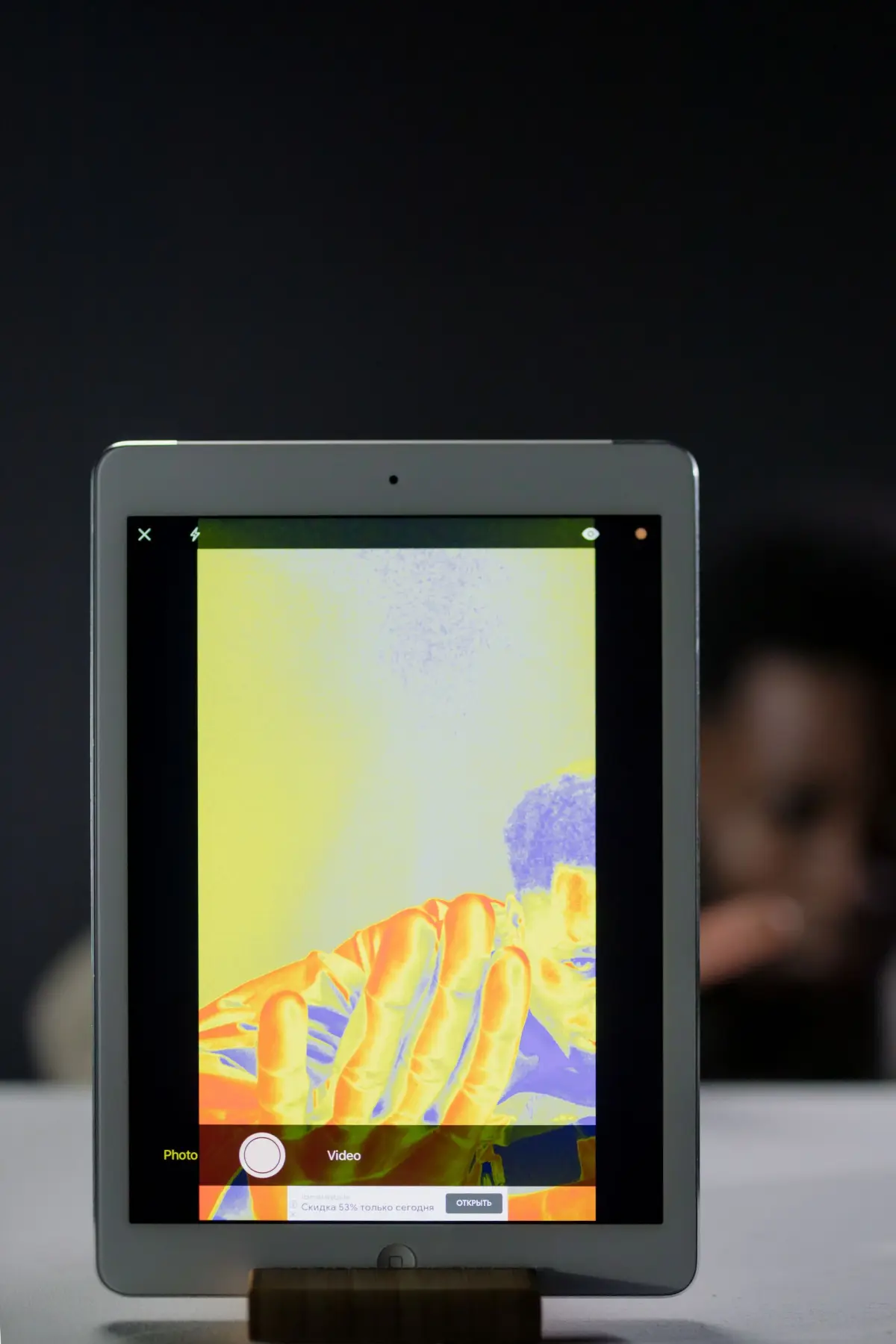
Images turn readings into something a non-specialist can follow. Each one should have a caption saying what it shows and where it was taken. Thermal images are most useful alongside an ordinary photo of the same area, because a colour pattern on its own is hard to place. Photos should also record the damage as found, the fittings tested, and the marked leak position. Our thermal imaging page explains what those images can and cannot show.
Scale and context help too. A close-up of a stained board means more when it sits next to a wide shot of the whole room, and a photo with a tape measure or a moisture meter reading in frame is easier to interpret than one with nothing to measure it against. If the report is likely to go to a third party, images should be clear enough to read when printed, not only on a screen.
Is the leak location marked on a plan?
It should be. A mark on the floor can be cleaned off, covered by furniture or lost when a room is redecorated. A report should record the position in a way that survives:
- a sketch plan of the room or area, with the leak marked;
- measurements from fixed points such as walls, door frames or the edge of a bath;
- an indication of depth where it is relevant, for example in a screed floor or underground;
- the route of the affected pipe, where it was traced.
With this, a plumber can open up in the right place and an insurer can see that the opening was justified.
Does the report explain the cause?
A good report distinguishes between the source (where the water escapes) and the cause (why it escapes). "Leak under the kitchen floor" is a source. "Weeping compression joint on the cold supply under the kitchen floor" is a source and a cause. Where the cause can only be confirmed once the pipe is exposed, the report should say that plainly rather than guess.
A report should describe what the engineer found. It is not the engineer's job to decide whether an insurer will pay, and a report that tries to argue a claim tends to be trusted less, not more.
What should the recommendations include?
- The repair needed and the likely access required, for example lifting two tiles or opening a section of plasterboard.
- Any precautions until the repair is done, such as isolating a pipe or not using a shower.
- Whether drying is likely to be needed after the repair.
- Any further investigation recommended, with the reason.
What limitations should a report list?
Every survey has limits, and an honest report states them. Common ones are:
- areas that could not be accessed, such as rooms that were locked, fixed furniture or a flat above that was not available;
- systems that were not tested, and why;
- conditions that affected the results, for example a warm day reducing the contrast in thermal images;
- that the survey is not a structural, electrical or drainage survey unless it says so.
Limitations are not a weakness. They tell the reader exactly how far the conclusions can be relied on.
How do you judge the report you have received?
- Could someone who was not there understand what was tested and why?
- Does each conclusion follow from a reading or an image in the report?
- Is the leak located precisely enough for a repairer to open up in one place?
- Does it separate the source from the cause, and say when the cause is not yet confirmed?
- Are the limitations stated?
- Is it dated, with the property address and the name of the person who carried out the survey?
If the answer to any of these is no, ask for clarification while the visit is still fresh. It is much easier to add a missing reading or photo reference then than months later.
When should you call a leak detection specialist?
If you need a written record of a leak for an insurer, freeholder, landlord or tenant, arrange a survey that includes a report before any opening up or repair work removes the evidence. Every Leak Detect London survey includes a written report, and our trace and access surveys are set up for exactly this purpose. Thermal imaging surveys start at £150 and the combined detection package is £250 to £500. Call 020 3912 0200 to arrange one.
Frequently asked questions
Do insurers accept leak detection reports?
Insurers and loss adjusters often ask for evidence of where a leak is and what caused it, and a specialist report is one of the clearest ways to provide it. Whether a claim is accepted depends on the policy and the circumstances, not on the report alone.
How long after the survey should I get the report?
Ask when you book. What matters more than speed is that the report is complete: readings, images, a marked location and limitations, not just a short summary.
Can I use the report to get repair quotes?
Yes. A report with a marked plan, pipe type and recommended repair gives a plumber what they need to price the job, and helps you compare quotes on the same basis.
What if the report says the cause could not be found?
That can happen, for example when a leak is intermittent. A good report will say what was ruled out and what should be tested next, which still narrows the problem and avoids unnecessary opening up.
Should a leak detection report include thermal images?
If thermal imaging was used, yes, with a caption and preferably an ordinary photo of the same area. If it was not used, the report should explain which methods were used instead.