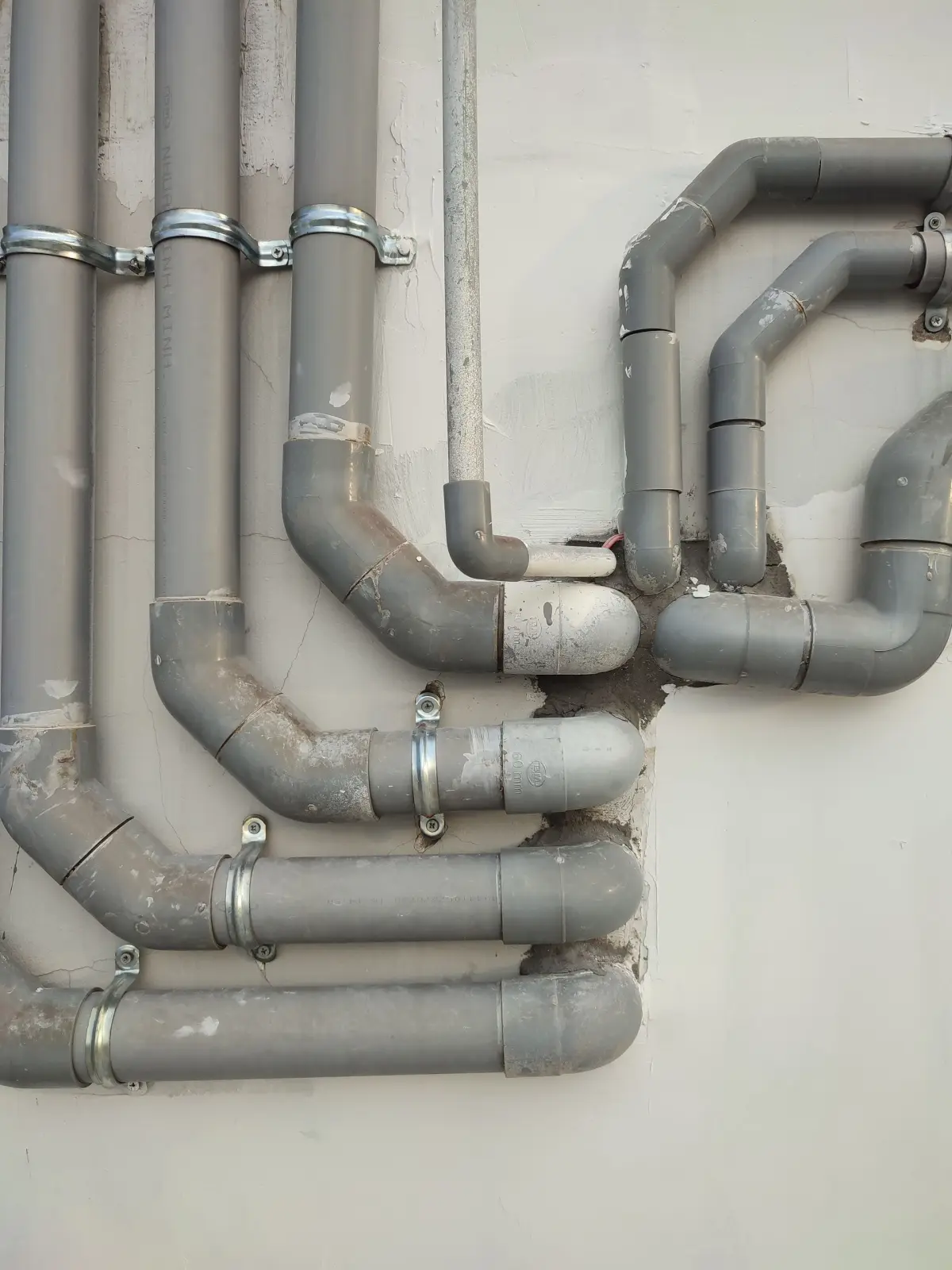
A pipe on the outside wall is dripping. You have lifted the toilet cistern lids, looked in the loft, and every water level sits where it should. Nothing is overflowing, and yet the drip carries on. This is a common and frustrating situation, and the answer is usually one of a small number of things that the obvious checks miss.
This guide explains how to work out which fitting a dripping pipe belongs to, why a fill valve can look fine in the daytime and still overflow, where hidden tanks tend to be, how an overflow differs from a boiler or hot water cylinder discharge, and when the dripping pipe is not an overflow at all.
Why is my overflow pipe dripping when the cistern and tank look fine?
The usual explanations are:
- The fill valve only passes some of the time, so the level looks right when you check but creeps over at other times.
- You checked the wrong fitting. The pipe belongs to a tank or cistern you have not looked at.
- Two overflows join. Some homes combine the warning pipes from several fittings into one pipe before it leaves the building.
- It is not an overflow. It is a boiler relief pipe, a condensate pipe, a cylinder discharge pipe or something else that happens to look similar.
- Water is getting into the pipe from elsewhere, such as rainwater running in from above, or condensation forming inside a cold pipe.
Which fitting does the dripping pipe come from?
Warning pipes are meant to discharge where the water will be noticed, which is why so many end on an outside wall. Guidance on the water fittings regulations says warning pipes should discharge in a conspicuous position, preferably outside the building. That helps you notice a problem, but not always to identify its source. Start by looking at the pipe itself and where it enters the wall.
| Pipe on the outside wall | What it usually serves | When it runs |
|---|---|---|
| Plastic pipe near a bathroom, sticking straight out | Toilet cistern warning pipe | When the cistern overfills |
| Plastic pipe high up, near the eaves | Loft cold water tank, or a heating feed and expansion tank | When a tank overfills, or when the heating is running if the expansion tank is involved |
| Copper pipe low down near the boiler, turned towards the wall | Boiler pressure relief valve discharge | When the heating system pressure is too high or the valve is not reseating |
| Plastic pipe near the boiler, often into a drain | Condensate pipe from a condensing boiler | While the boiler is firing |
| Copper pipe from the airing cupboard area, running to a gully | Unvented cylinder discharge pipe | When a safety valve on the cylinder opens |
| Small pipe near an indoor unit or window | Air conditioning condensate | While the air conditioning is cooling |
Inside, find the matching point on the other side of the wall. If the pipe is hidden, close the isolation valve to one fitting at a time and watch whether the drip stops over the following day.
Why would a fill valve only overflow some of the time?
A fill valve that has started to wear does not always fail completely. It may shut off almost fully, letting water creep past slowly, so the level rises very gradually and only reaches the overflow after several hours without use. By the time you look, someone has flushed and the level has dropped again.
Mains pressure also varies. At night, when demand in the area falls, pressure often rises, and a worn valve that holds in the daytime may pass more water. That is why so many overflows drip overnight and in the early morning.
- Mark the level. Put a pencil line or a strip of tape at the water level inside the cistern or tank last thing at night.
- Do not use that fitting overnight.
- Check first thing. If the water is above the mark or at the overflow, the fill valve is passing.
- Lift the float and listen. A valve that hisses faintly with the float raised is not sealing.
Our guide to a toilet overflow that keeps running explains how fill valves and floats are adjusted, and the same principle applies to the ballvalve in a loft cold water tank.
Could there be a tank or cistern you have not found?
Older London houses have often been altered many times, and not every tank is obvious.
- A heating feed and expansion tank. Homes with an open-vented heating system have a small tank in the loft, separate from the main cold water tank. Its overflow can run when its ballvalve passes, or when water is pushed up into it as the heating warms.
- A second loft space. Tanks can sit in a separate loft over an extension or a back addition, reached by a different hatch.
- An airing cupboard tank. Some combination cylinders have a small tank built on top.
- A concealed cistern. Wall-hung and back-to-wall toilets have their cistern hidden behind a panel or inside the wall.
- A redundant tank. A tank left in place after a system change may still be connected to the mains.
- A tank that serves another home. In converted houses and flats, a tank above you may belong to a neighbour, with its overflow passing through your wall.
If the drip changes when your heating is on, look for a feed and expansion tank. If the pipe is at the height of the roof void over a different part of the house, look for a second loft.
Is it an overflow or an unvented cylinder discharge?
An unvented hot water cylinder, which takes water at mains pressure, has safety valves that open if the pressure or temperature gets too high. Their discharge runs through a tundish, a short open funnel section that lets you see water passing, and then down a pipe to a safe outside point, often low down or into a gully.
That discharge pipe is not an overflow. Water from it means a valve on the cylinder has opened or is letting by, which can point to a problem with the cylinder's pressure or temperature controls. Look at the tundish near the cylinder. If water is running through it, the cylinder needs an engineer qualified to work on unvented systems. If hot water or steam is coming out, switch off the boiler and any immersion heater and get help quickly. Our guide to a leaking hot water cylinder explains the tundish in more detail.
When is a dripping pipe not an overflow at all?
- A boiler relief pipe drips when the heating pressure rises too high or the valve does not reseat. Watch the boiler gauge from cold to hot. Our guide to a dripping boiler pressure relief pipe covers this in full.
- A condensate pipe carries water from a condensing boiler every time it fires, and is meant to drain continuously while it runs.
- An air conditioning condensate pipe drips while the unit is cooling, and more on humid days.
- Rainwater can run down a wall and drip from the end of any pipe. If the drip only follows rain, look above the pipe.
- Condensation inside a cold pipe can drip a little in cold weather without any water entering from the fitting.
Noticing when the drip happens, whether the water is warm, and whether it has any smell narrows these down quickly.
What if you still cannot find the source?
If the drip continues after every fitting has been checked, a leak detection engineer can trace the pipe from the outside wall to its source. That may involve following the pipe route with thermal imaging while water runs through it, isolating fittings one at a time, taking meter readings with everything off, and checking the areas the pipe passes through for damp. The result is a clear answer about which fitting is responsible, and whether water is also leaking somewhere it should not.
When should you call a leak detection specialist?
- the drip carries on after the cisterns and tanks you can find have been checked;
- you cannot tell which fitting the pipe belongs to;
- there is damp along the pipe route inside, or a stain on a ceiling;
- the meter moves with everything turned off.
A boiler relief valve or unvented cylinder problem is a job for the appropriate heating engineer. For tracing the source of water, our water leak detection uses thermal imaging and meter checks. A thermal imaging survey is £150 to £250, and a combined detection package is £250 to £500. Call 020 3912 0200.
Frequently asked questions
Why does my overflow pipe only drip at night?
A worn fill valve can pass water slowly, so the level only reaches the overflow after hours without use. Mains pressure is often higher at night, which makes a weak valve pass more.
How do I know which tank the overflow pipe is from?
Look at where the pipe enters the wall and find the fitting on the other side. If it is hidden, close the isolation valve to one fitting at a time and see which stops the drip.
Is a dripping overflow pipe an emergency?
Usually not, but it wastes water and should be fixed. A pipe discharging hot water or steam from a cylinder is different, and needs the heat sources turned off and an engineer.
Why is the overflow dripping when the heating is on?
In an open-vented heating system, the feed and expansion tank in the loft can overflow if its ballvalve passes or if water is pushed into it as the system heats up.
Can a boiler pipe outside look like an overflow?
Yes. A copper pipe near the boiler is often the pressure relief discharge, and a plastic one may be the condensate pipe. Neither is a cistern overflow, and each points to a different check.