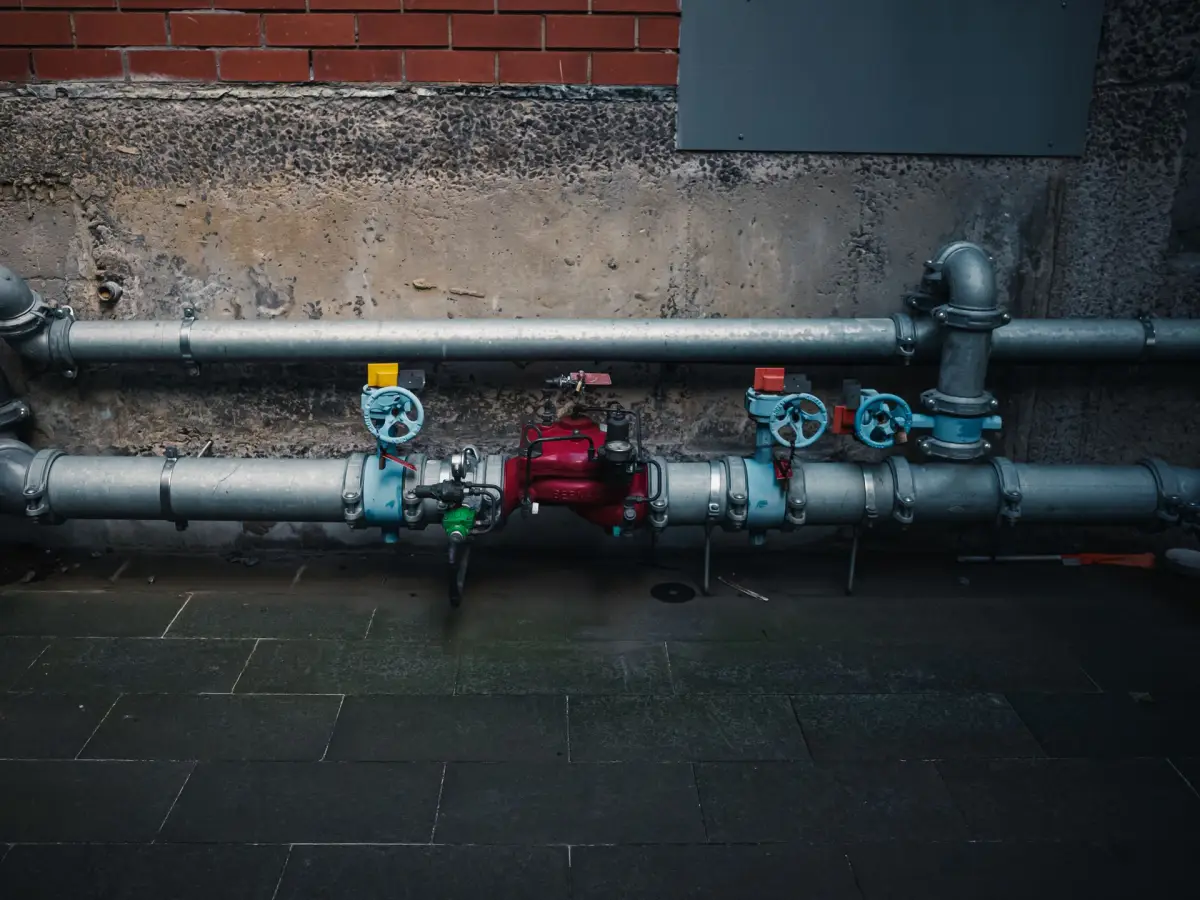
A leak detection system is a permanent installation that watches for water where it should not be, or for water use that should not be happening, and raises the alarm. In a larger building, it can also close a valve automatically. It is a different thing from a leak detection survey, which is a visit to find a leak that already exists. The two work best together.
This guide is about systems for whole buildings: blocks of flats, offices, and the plant rooms that serve them. If you are thinking about a system for a single home, our guide to smart leak detection systems for homes covers the consumer devices.
What does a building leak detection system do?
Every system, however large, does some combination of three things:
- Sense. Detect water on a surface, or an abnormal flow or pressure in the pipework.
- Alert. Send an alarm to a panel, a building management system, a phone or a monitoring service.
- Act. Close a valve, or switch off a pump or a piece of equipment, to limit the damage.
The response side is easy to overlook. An alarm that goes to an empty office at the weekend, or to a phone nobody checks, protects very little. Before choosing equipment, it is worth deciding who will receive alerts at each time of day, what they are expected to do, and whether they can reach the affected area and the relevant valves. In a block of flats that might be a concierge, a managing agent's out-of-hours line or the residents themselves. In an office it might be security staff or a facilities contractor. The answer often decides whether automatic shut-off is essential or merely useful.
Not every system does all three. A simple sensor network may only alert. A flow monitoring system may alert and act. The right mix depends on the building, who is there to respond and how much damage an undetected leak could cause.
What types of leak detection system are used in buildings?
| Type | How it works | Best suited to | Main limit |
|---|---|---|---|
| Spot sensors | A probe or pad that triggers when water bridges its contacts | Under tanks, water heaters, sinks and appliances | Only detects water at that exact spot |
| Zone or cable sensors | A water-sensing cable laid along a floor or round equipment; some types report where along the cable water was found | Plant rooms, under raised floors, around tanks and along pipe runs | Needs careful routing and protection from damage and dirt |
| Flow monitors | Meters or sensors on the supply that learn normal use and flag continuous or unusual flow | Incoming mains and sub-meters for floors, blocks or tenants | Shows that water is being lost, not where |
| Pressure monitoring | Sensors on sealed heating or chilled water systems that flag a falling pressure or frequent top-ups | Closed heating and cooling circuits | Slow leaks can take time to show |
| Automatic shut-off valves | Motorised or solenoid valves that close when a sensor or flow monitor raises an alarm | Individual flats, floors, washrooms and plant | Only isolates what is downstream of the valve |
How do automatic shut-off valves work in a building?
A shut-off valve sits on a pipe and stays open in normal use. When it receives a signal, from a sensor, a flow monitor or the building management system, it closes and stops water reaching everything downstream. The design questions matter more than the valve itself:
- What does it isolate? A valve on the incoming main stops everything. A valve on each floor or flat limits the effect to the area with the problem.
- What must it never isolate? Supplies to sprinklers or other fire protection must not be cut by a leak system. That part of the design needs the input of whoever is responsible for fire safety in the building.
- What happens on power loss? The valve should behave in a predictable, agreed way if power or the signal is lost.
- Who resets it? Someone needs to know how to reopen the valve and be available to do it.
- Is it tested? Valves that never move can seize. A regular test is part of owning one.
Where do sensors go in blocks of flats, offices and plant rooms?
Blocks of flats
- in each flat, under the water heater or cylinder, the kitchen sink and washing machine, and the bathroom;
- in communal tank rooms and booster pump rooms;
- at the base of service risers, where water from several floors can collect.
Offices
- in washrooms, tea points and kitchens;
- under raised floors, especially near comms rooms and server equipment;
- above suspended ceilings where pipes run over sensitive areas.
Plant rooms
- around tanks, calorifiers, pumps and pressurisation units;
- along the floor near drains and low points where water collects;
- under pipe runs with a history of weeping joints.
Sensors belong at low points, where water will actually reach, not wherever they are easiest to fix.
How does flow monitoring spot a leak?
Most buildings have periods when very little water should be used, such as night-time in offices or the small hours in a residential block. A flow monitor records the normal pattern and raises an alarm when flow stays above the expected level for too long. A constant flow at three in the morning is a classic sign of a leak or a fitting that is running.
Sub-metering makes this far more useful. With meters on each floor, block or tenant, a loss can be traced to one part of the building before anyone starts looking. The checks we describe in our guide to unexplained high water usage are the manual version of the same idea.
What can a leak detection system not do?
- It cannot locate a hidden leak. A flow alarm says water is being lost. It does not say which wall, floor or pipe.
- Sensors only see where they are. Water running inside a wall or under a slab may never reach a sensor.
- Water meters do not see heating leaks. A sealed heating system needs its own pressure monitoring.
- False alarms happen. Cleaning, condensation and unusual but legitimate water use can all trigger alerts. Poorly set systems get ignored.
- They need looking after. Batteries, wireless signal through concrete, sensor contamination and valve testing all need a maintenance routine.
How does a system work alongside a leak detection survey?
The two do different jobs and help each other.
- Before installation, a survey can check for existing leaks. Otherwise the flow monitor learns a leak as part of normal use and never alarms on it.
- When designing the system, survey findings show where pipework runs, where water collects and where problems have happened before, which guides sensor placement.
- After an alarm, the system has done its job by stopping or flagging the loss. A survey then finds the exact location so the repair is targeted.
Our leak detection technology page explains the survey equipment used at that stage.
What should you ask before specifying a system?
- What damage are we trying to prevent, and where would it be worst?
- Who receives the alarms, at what times, and what are they expected to do?
- Which supplies can safely be isolated automatically, and which must never be?
- Can it connect to the existing building management system, if there is one?
- How will sensors and valves be tested and maintained, and by whom?
- Are there existing leaks that should be found and fixed before the system learns its baseline?
When should you call a leak detection specialist?
- a flow monitor or pressure sensor is alarming but nothing visible is leaking;
- a shut-off valve keeps closing and the cause is unclear;
- you want existing leaks ruled out before a new system is commissioned;
- a sensor has found water, but the source is inside the structure.
Our commercial leak detection is priced from £300. Call 020 3912 0200 to discuss the building.
Frequently asked questions
What is a leak detection system?
A permanent installation that detects water where it should not be, or abnormal flow or pressure in the pipework, and raises an alarm. Some systems also close a valve automatically to limit the damage.
What is the difference between a leak detection system and a leak detection survey?
A system monitors continuously and tells you something is wrong. A survey is a visit by an engineer who uses equipment such as thermal imaging, acoustic listening and tracer gas to find exactly where an existing leak is.
Can a leak detection system find hidden leaks?
It can show that a hidden leak exists, for example through continuous flow or falling heating pressure, but it cannot show where the leak is. That needs a survey.
Where should water leak sensors be placed in a building?
At low points where water will collect: under tanks, water heaters, sinks and appliances, in plant rooms, under raised floors, at the base of risers and in washrooms and kitchens.
Should an automatic shut-off valve isolate the whole building?
Not usually. Valves on each floor, flat or area limit the disruption when one closes. Supplies to sprinklers and other fire protection must never be isolated by a leak system.